Institutional dynamics, why you should simplify your organization

I live in Paraguay where labor is cheap. Everywhere you see people performing work which could easily be automated or done more efficiently. That is what I noticed when I moved to Germany. There weren’t security guards in front of every medium to big business, not even in the banks. Sure, it is safer over there, but the staff in markets, service stations etc was also less numerous than in Paraguay. In Germany, labor is expensive so businesses try to automatize everything they can. For instance, when there was something going on on the road, you would often see a portable traffic light. In Paraguay, there would be (at least) one traffic police officer standing or sitting there all day long. Without going into an extensive debate, I think automatization is a good thing because it frees people from the boring, repetitive work. Sure, there are fewer jobs, but that isn’t necessarily a bad thing. As the economy’s productivity rises, our lives become more comfortable. A common person in a first world country today lives better than kings did centuries ago. And fewer jobs are a natural side-effect of a more productive society, the problem has just to be addressed in the right way. Sooner or later we are going to need universal income anyway. But let’s talk about Warren Buffett. The book Buffett: The Making of an American Capitalist explains how Buffet runs Berkshire Hathaway so very efficiently. In the mid-to-late eighties, Buffett’s corporate staff consisted of just 11 people, despite Berkshire being a Fortune 500 Company already. Two secretaries, a receptionist, three accountants, one trader, one treasurer and an insurance manager, his longtime assistant Gladys Kaiser and the boss. How could Warren run his company with so little personnel?  This style of running a company with little overhead was Buffett’s way of minimizing what he calls “institutional dynamics.” If he’d hired a floor of traders, they would have found something to trade, lawyers, someone to sue. 

A compact organization lets all of us spend our time managing the business rather than managing each other.
read more →

Como leer libros en formato PDF

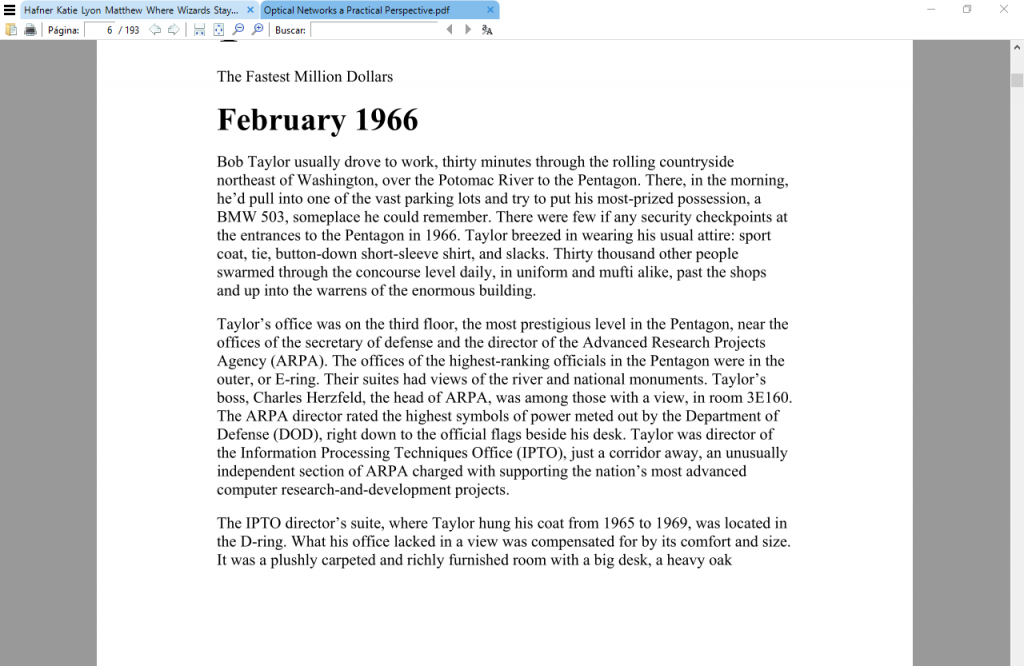
Alguna vez te frustraste al leer libros PDF en tu computadora porque no se abrieron en la última página que leíste? Para los Epubs OSX lleva una buena aplicación pero tampoco funciona con PDFs. Para Windows, acabo de encontrar una solución. Hay una aplicación que se llama SumatraPDF que recuerda hasta donde leíste. Funciona perfectamente, es lightweight y free. Si quieres una app que también funciona en OSX y otras plataformas, puedes probar Foxit, una aplicación open source. Lo bueno de Foxit es que soporta más funciones como comentarios y marcadores.Btw el libro que se ve es Where Wizards stay up late, cuenta la historia del Internet, muy recomendado!

read more →

Why I love green tea

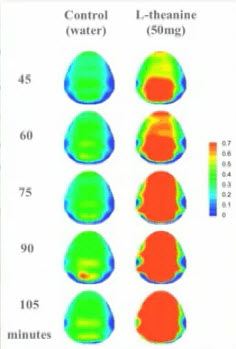
Today I felt very good in the morning, not that I usually don’t, but it may have something to do with this plant, Camellia sinensis. All the most consumed teas — white, green, oolong, and black — come from the leaves of the same plant, Camilla sinensis. We will focus on green tea because it is the least processed tea made with camilla sinensis. As Dr. Greger points out in one of his older videos, the world is obsessed with the tea plant. It is the most consumed beverage on earth. But there are hundreds of thousands of plants on earth, why are we drinking this particular one? It’s probably not the taste, it turns out it might be how this plant influences our brain. We have evidence from EEG’s (brain imaging) that our brain starts to resemble a high state of alpha, a state like that of experienced meditators. The alpha state is when we are fully alert and focused, but calm. It is the state we want to be in, or I do at least. In the image below we see a little yellow-reddish color on the control side after 90 minutes of relaxation from a non-meditator person. Now try to spot the difference to the person on the right after two cups of tea. A lot of alpha activity going on there. But what about the side effects? It turns out there are several. A 30 percent reduction in breast cancer risk as well as protection against gynecological malignancies, such as ovarian cancerand endometrial cancer. Lowering of cholesterolblood pressureblood sugar, and body fat. Protection of the brain from cognitive decline and stroke. Decreased risk of diabetes, tooth loss, and it even has benefits when applied topically to the skin.[1] There are many more health benefits which I’m not going to focus on in this post but you can find them by watching this playlist from Nutritionfacts.org. I’m really interested in the effects of tea on the brain since I’m also a meditator and know the benefits an improved alpha brain function first-hand. L-theanine is the amino acid which does the magic in our brain. It is found only in two places, in Camellia sinensis (the tea plant) and a mushroom called Bay Bolete. L-theanine increases dopamine and the production of alpha waves in the brain. It also increases the activity of the inhibitory neurotransmitter GABA, which has anti-anxiety effects. [2,8] L-theanine also has a synergistic effect with caffeine. [3,4,5] The other beneficial component in green tea is EGCG. EGCG has Antioxidant, Anti-Inflammatory, and Anti-Aging Properties but also enhances memory, attention, and learning. [6] Researchers have also detected measurable increases in alpha, beta and theta brainwave activity after subjects have ingested EGCG. [7] Don’t bother with the single components, it has been shown that green tea is best-consumed whole, instead of individual components as supplements. [9] So how do I drink my tea? I like to prepare ice tea since I live in a hot climate. Sometimes I also open the tea bag and mix that stuff with yerba for my terere. A great article that goes into details of how green tea influences our health:

read more →

How to learn

The general way education works in our society is that we learn X amount of years and then we execute on the acquired knowledge. In many cases, this methodology is necessary. Doctors and pilots need to learn a lot of things before they start practicing. Buf often careers are only partially useful and applicable in the real world. A different approach is learning while you are doing something. I started to use this widely while working in technology. While I have finished a computer science degree, it was only useful to a limited degree. Most of what I learned I never used and while working as a software engineer I had to learn many things almost from scratch and on demand. In general, learning on demand must be applied in areas where there is no predefined path. Entrepreneurship is a good case. Elon Musk is one of the boldest and most successful Entrepreneurs and he does a lot of things like building rockets without having a degree in that particular discipline. He studied physics and economics which was very useful to him, but he had no idea about building rockets so he read some books. That might sound funny, but it’s not the whole story. A book is a good starting point and Elon loves books but he is also a master of absorbing knowledge from other people and paying careful attention to feedback. The book Elon Musk: Tesla, SpaceX, and the Quest for a Fantastic Future reveals a good sample.

“Musk initially relied on textbooks to form the bulk of his rocketry knowledge. But as SpaceX hired one brilliant person after another, Musk realized he could tap into their stores of knowledge. He would trap an engineer in the SpaceX factory and set to work grilling him about a type of valve or specialized material. “I thought at first that he was challenging me to see if I knew my stuff,” said Kevin Brogan, one of the early engineers. “Then I realized he was trying to learn things. He would quiz you until he learned ninety percent of what you know.” People who have spent significant time with Musk will attest to his abilities to absorb incredible quantities of information with near-flawless recall. It’s one of his most impressive and intimidating skills and seems to work just as well in the present day as it did when he was a child vacuuming books into his brain. After a couple of years running SpaceX, Musk had turned into an aerospace expert on a level that few technology CEOs ever approach in their respective fields. “He was teaching us about the value of time, and we were teaching him about rocketry,” Brogan said.”

read more →

Type to search across all posts…